

Interactive
Experiences for
Manufacturing &
Intralogistics
Help your customers understand complex products faster, generate more qualified leads, and accelerate deals through the sales cycle.
Scroll for more

The Challenge: Complex Products, Long Sales Cycles, Crowded Markets
Selling material handling systems, manufacturing equipment, or industrial solutions is a multi-month process. Your prospects need to understand sophisticated products, visualize them in their facilities, and get buy-in from multiple stakeholders before committing to six or seven-figure investments.
Your sales team knows the pain: 90+ day cycles, stalled deals waiting for internal alignment, prospects who can't visualize the solution until they see it in person.
Your marketing team feels it too: high bounce rates on product pages, trade show leads that go cold, website traffic that doesn't convert because people can't grasp what you're actually selling.
Traditional approaches—PDFs, static renderings, and PowerPoint decks—work, but they're slow. They don't create the "aha moment" that turns browsers into buyers. And when you're competing in crowded industrial markets, "good enough" isn't winning deals anymore.
The companies pulling ahead aren't just showing products. They're creating interactive experiences that prospects want to engage with, remember, and share with their internal teams.


A Smarter Approach: Layer Interactive Experiences Into What You're Already Doing
Instead of replacing your entire sales and marketing stack, we help you build interactive layers on top of what's already working. Each layer adds more engagement, more understanding, and more measurable data about what your prospects actually care about.
Each layer is reusable. The same 3D assets work across your website, email campaigns, sales demos, trade show booths, and training programs. You build once, use everywhere. Your cost-per-use drops dramatically over time.
Here's how it works:
-
Layer 1: Interactive Product Exploration
Start with web-based 3D experiences. Your prospects explore products from every angle, see how components work together, and understand technical details visually. No app downloads, no friction. Just instant engagement on any device.
This replaces static product images on your website, gives your sales team better demo tools, and captures engagement data that flows into your marketing automation.
Most clients start here. Typical timeline: 8-12 weeks from kickoff to launch.
-
Layer 2: AR Visualization
Let prospects place full-scale equipment in their own facilities using smartphones or tablets. They see exactly how your forklifts fit in warehouse aisles, how your machinery integrates into production lines, or how your material handling system optimizes their space.
This is where leads become sales-qualified. When someone spends 20 minutes configuring and placing your equipment in AR, they're not browsing—they're buying.
This is where we see the biggest impact on both lead quality and sales velocity. No special hardware needed.
-
Layer 3: VR Deep Dives
For enterprise deals, experience centers, or major trade shows where the ROI justifies it, immersive VR lets prospects step inside your solutions. Walk through configured warehouse layouts. Operate equipment virtually. Experience safety protocols.
We typically recommend VR for experience centers, flagship trade show booths, or big investments where the extra engagement delivers measurable return. Most companies find Layers 1 and 2 provide the marketing and sales ROI they need.
What This Actually Looks Like in Practice
One of our material handling clients faced a familiar problem. Marketing was generating website traffic, but engagement was weak—average time on product pages was under 2 minutes. Sales cycles averaged 90 days, and deals often stalled because prospects couldn't visualize how equipment would fit in their warehouses. Internal stakeholders (operations, finance, executives) struggled to align without seeing solutions in context.
We built them an interactive 3D configurator and AR visualizer. Prospects could configure their ideal setup online, then use AR to place it in their actual facility using just their phone. The configurator lived on their website, in sales demos, and at trade show booths.
The investment: They started with Layer 1, proved ROI within 90 days, then added AR capabilities. The same assets now power their website, sales process, trade shows, and customer training—delivering value across the entire customer journey.
The results after 6 months:
-
Marketing Impact:
- Website engagement on product pages jumped from 2 minutes to 18 minutes average
- Conversion rate from visitor to lead increased 43%
- Lead quality improved—sales reported MQLs were "more educated and ready to talk"
- Trade show booth traffic increased 2.3x compared to previous year with traditional displays
- Email click-through rates on campaign links featuring configurator: 34% vs. 8% for PDF datasheets
-
Sales Impact:
- Sales cycle dropped from 90 days to 62 days
- Close rate on deals where AR was used: 34% vs. 22% without
- Sales team could identify hot prospects based on configuration data flowing into Salesforce
- Reduced in-person site visits by 30% because prospects were pre-qualified and informed
See It in Action: Manufacturing Companies Getting Results
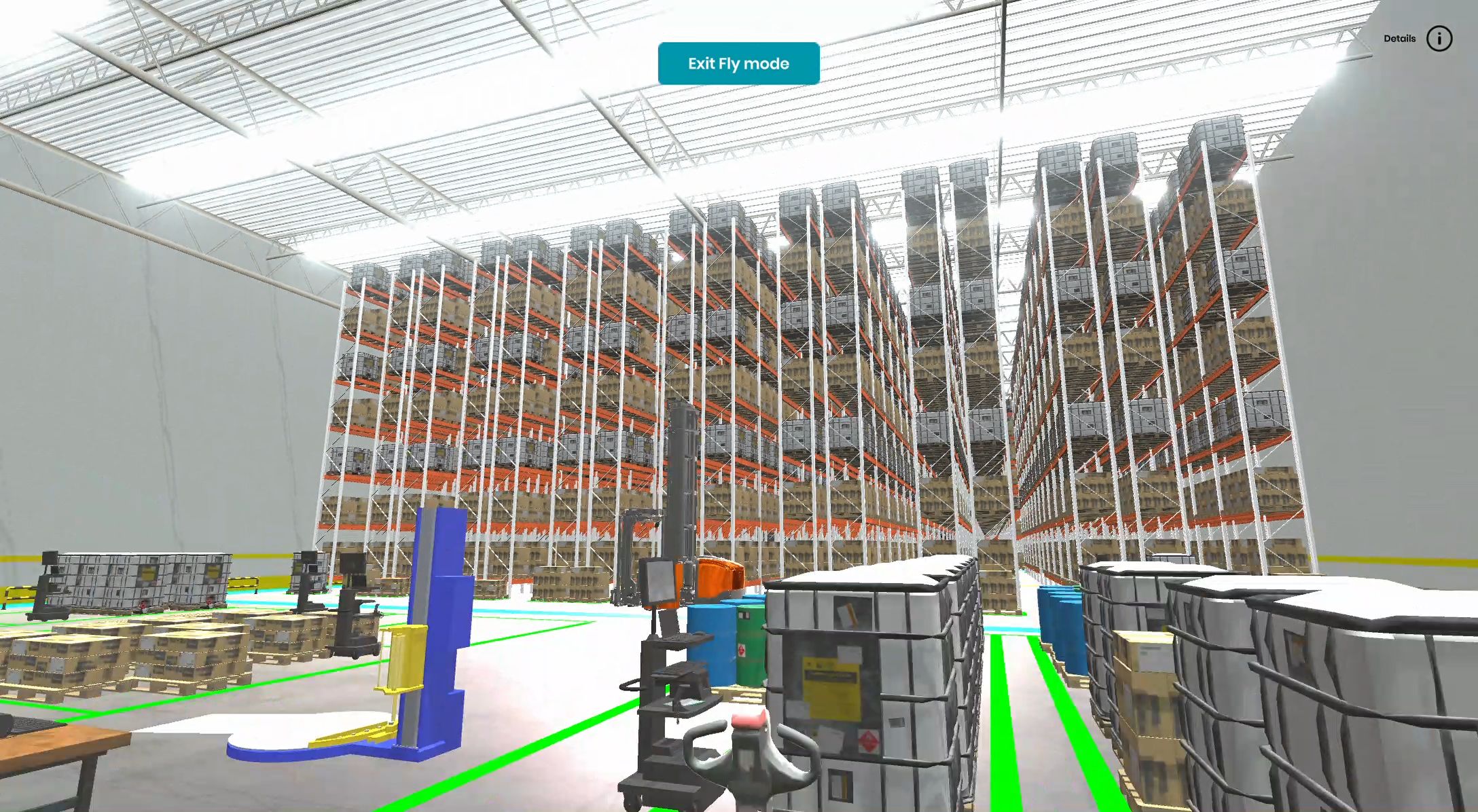
Warehouse Builder – Toyota Material Handling
Warehouse layout conversations used to mean static CAD drawings and confused stakeholders. We built an interactive tool that lets prospects design layouts in 2D, then instantly visualize in 3D or VR. Sales cycles got significantly shorter because everyone finally saw the same thing. Marketing embedded it on the website and conversion rates jumped dramatically.

Product Explorer – Toyota Material Handling
"I need to see it in person" was killing deal momentum. AR product placement on smartphones let prospects place full-scale forklifts in their actual warehouses instantly. Sales cycles shortened substantially, close rates climbed, and product pages started converting visitors into qualified leads. Same tool works for website visitors and sales demos.
Marketing ROI: Lead Generation That Actually Converts
-
Website Performance
Transform your product pages from static brochures into interactive experiences. Average engagement time typically increases from 2-3 minutes to 15-25 minutes. Bounce rates drop. Time-on-site increases. Conversion rates from visitor to lead improve by 35-50%.
-
Lead Quality Over Quantity
When someone spends 18 minutes configuring your equipment and exploring features, they're not a casual browser. They're a high-intent lead. Your sales team stops chasing tire-kickers and starts closing informed buyers. Marketing can prove they're delivering better leads, not just more leads.
-
Content Differentiation
Your competitors are sending PDF catalogs. You're sending interactive AR experiences. Which one gets remembered? Which one gets forwarded to the decision committee? Which one positions you as the innovative leader in your category?
-
Trade Show & Event ROI
Booth traffic increases 2-3x when you replace traditional displays with interactive experiences. More importantly, the leads you capture are qualified—you know exactly which features they explored, which configurations they built, and how ready they are to buy. Your cost-per-qualified-lead drops significantly.
-
Measurable Attribution
See exactly which marketing channels drive the most engaged prospects. Track which product features generate the most interest. Identify which configurations lead to closed deals. Your marketing dashboard gets real ROI data, not vanity metrics.
-
Campaign Performance
Email campaigns featuring interactive configurator links see 3-4x higher click-through rates than PDF datasheets. LinkedIn ads driving to interactive experiences convert better than traditional landing pages. You're not just generating clicks—you're generating engagement that matters.
Proven in Manufacturing & Industrial
We've spent 15+ years building immersive experiences for companies like Toyota Material Handling, Stow, and BMW. We understand material handling, warehouse logistics, and complex B2B sales cycles because we live in that world every day.
For Toyota Material Handling, we've built AR visualizers, VR product demos, interactive configurators, and warehouse planning tools. The BT Reflex project replaced traditional product photography entirely with a complete 3D asset suite, enabling faster market variations and perfect consistency across all touchpoints—from website to sales demos to training.
This isn't experimental technology. It's proven, measurable, and already working for companies in your industry.

Sales ROI: Faster Cycles, Higher Close Rates
-
Shorter Sales Cycles
We typically see 20-35% reductions in time-to-close. Prospects understand your solutions faster because they've explored them interactively. Questions get answered before sales calls even happen. The time from first contact to qualified opportunity shrinks because people "get it" immediately.
-
Higher Close Rates
Sales teams using AR visualization tools report 30-50% higher close rates on those deals compared to traditional demos. Why? Because prospects who interact with your products in AR have already mentally bought. They've placed it in their space. They've configured it for their needs. They're not exploring options—they're confirming their decision.
-
Better Stakeholder Alignment
Getting approval from operations, finance, and C-suite is easier when everyone can interact with the solution. AR lets multiple decision-makers visualize the same equipment in their space, on their own time. This reduces miscommunication, eliminates "I didn't realize it looked like that" objections, and speeds up approvals.
-
Data-Driven Selling
Your CRM gets richer data. Which prospects spent 25 minutes configuring? Which features did they focus on? Which configurations did they build? Your sales team knows who's hot and who needs nurturing before they even pick up the phone. No more wasting time on unqualified leads.
-
Competitive Differentiation
When your competitor shows up with a brochure and you show up with an interactive AR experience on your tablet, the choice is obvious. You're not just selling better, you're selling smarter. You become the innovative leader, not the commodity supplier.
Integration With Your Existing Systems
You're not starting from scratch. You have a CRM (probably Salesforce or HubSpot), marketing automation (Marketo, Pardot, HubSpot), and existing workflows that work.
Our interactive experiences integrate with your existing stack:
- Configuration and engagement data flows directly into your CRM and marketing automation
- Lead scoring improves based on engagement depth and feature exploration
- Analytics plug into your marketing dashboard (Google Analytics, Adobe, etc.)
- Works alongside your current website—no redesign required
- Sales team accesses demos through tools they already use (tablets, laptops)
- Compatible with your existing trade show infrastructure
We don't ask you to change how you work. We just make what you're already doing significantly more effective.
Where Manufacturing Companies Use This
-
Website & Digital Marketing
Embed 3D configurators directly on product pages. Let prospects build their ideal solution before contacting sales. Capture leads who are already informed and engaged. Track which features drive the most interest to guide product development and messaging.
-
Sales Enablement
Give your sales team interactive demos they can run on tablets during customer meetings. No internet required, fully branded, infinitely more engaging than slides. Sales reps report that demos using AR drive more productive conversations and higher close rates.
-
Trade Shows & Experience Centers
Create multi-layered journeys that combine interactive displays, AR stations, and (when justified) VR simulators. Visitors don't just see your products—they experience them. Booth traffic increases, lead quality improves, and you stand out in crowded exhibition halls.
-
Email Campaigns & Nurture Sequences
Replace PDF attachments with links to interactive 3D experiences. Track who engages, what they configure, and how ready they are to buy. Marketing automation becomes smarter when you know exactly which prospects are actively exploring solutions.
-
Customer Training & Onboarding
The same 3D assets used for sales become training tools. New operators learn in VR before touching real equipment. Safety protocols become interactive experiences, not PowerPoint decks. Training time typically drops 30-40%, and knowledge retention improves.
-
Warehouse & Facility Planning
Help clients design complex layouts by letting them visualize in 2D, 3D, AR, or VR. Multiple stakeholders align on spatial decisions before breaking ground. Reduces costly layout mistakes and change orders while accelerating the sales process.
From Trade Show Buzz to Training ROI

Built for Scale, Not One-Off Projects
We're not here to build you a cool VR demo that gets used once at a trade show and sits on a shelf. We help you build a reusable immersive stack that integrates with your existing marketing, sales, and training systems.
Your 3D assets work everywhere. Your interactive experiences plug into your CRM and marketing automation. Your data flows where you need it. You start with one product line, prove the ROI, and expand from there. No massive upfront investment, no rip-and-replace of what's already working.

Toro AR Configurator
Toro's complex equipment configurations meant low website engagement and showroom dependency. Their mobile AR configurator let prospects build and visualize equipment in their own space. The configurator quickly became a top lead source, trade show booth engagement increased dramatically, and self-configured leads closed at much higher rates.

VR Safety Simulator – Toyota Material Handling
Traditional forklift training took weeks and risked equipment damage with every mistake. VR training cut time substantially and eliminated damage costs entirely. But here's the sales win: "included VR training" became a differentiator that competitors couldn't match, and the same 3D assets power sales demos and marketing content.
Investment Approach: Prove ROI Before Scaling
Most clients start with Layer 1 (interactive 3D experiences), measure the impact on marketing and sales metrics, then expand to additional layers and products.
You're not locked into a massive upfront investment. You prove ROI at each layer before adding the next. And because the 3D assets are reusable, your cost-per-use drops dramatically over time. One asset library powers your website, sales demos, trade shows, email campaigns, and training.
-
Investment levels vary based on:
- Product complexity and number of configurations
- Number of products in your initial launch
- Integration requirements with existing systems
- Whether you need web-only or multi-platform deployment
-
Typical approach:
- Start with 1-3 hero products to prove concept
- Launch on website and in sales demos
- Measure impact over 60-90 days (engagement, lead quality, sales velocity)
- Expand to additional products and channels based on ROI
- Add AR layer once Layer 1 proves value
- Consider VR only for high-value use cases where ROI is clear
Next Steps: Let's Explore What's Possible
We get it. You're evaluating options, building a business case, and trying to figure out if this makes sense for your company. We're not here to push a hard sale. We'd rather have a real conversation about what's possible for your specific products and market.
Choose the option that fits where you are:
-
Option 1: See How It Works (15 Minutes)
Quick screen share where we show you real manufacturing examples and walk through exactly how this works. No pitch, just "here's what's possible for companies like yours."
Let's schedule it -
Option 2: Get a Custom Assessment (No Obligation)
Send us specs or examples of 2-3 of your products. We'll send back a custom assessment of what an interactive experience could look like for you, including ballpark ROI projections and investment levels.
-
Option 3: Strategy Conversation (30 Minutes)
Talk with our manufacturing team about your specific sales and marketing challenges. Zero pressure, just exploration. We'll tell you honestly whether interactive experiences make sense for your situation—and if not, we'll say so.
FAQs for Interactive Experiences Page
Need more clarity?
Still have questions?
Here are a few common questions about Interactive Experiences for Manufacturing & Material Handling Companies.
How long does implementation take and will it disrupt our current operations?
Most clients launch Layer 1 (interactive 3D) within 8-12 weeks from kickoff. Implementation happens in parallel with your existing operations, not as a replacement. We work with your CAD files and existing assets, so you are not starting from scratch. Your sales team continues using current tools while we build. Once live, we train your team in 1-2 sessions. No disruption to daily operations, no ripping out what already works. You add capability without losing momentum.
What kind of ROI should we expect and how quickly?
Most manufacturing clients see measurable impact within 90 days. Website engagement typically jumps from 2-3 minutes to 15-25 minutes on product pages. Lead quality improves because prospects self-qualify through interaction. Sales cycles typically shorten 20-35% because buyers understand faster. Close rates on deals using AR increase 30-50%. The investment pays back within 6-12 months, then compounds as you expand to more products. Your cost-per-use drops dramatically as the same assets power website, sales, events and training.
Do our sales reps need technical training to use these tools?
No specialized technical skills required. If your team can use an iPad, they can run interactive demos. Most sales reps master the tools in one training session. The experiences are designed to make their job easier, not add complexity. Reps report that interactive demos lead more productive conversations because prospects engage instead of passively watching slides. The technology does the explaining, freeing reps to focus on needs and objections. Adoption is typically high because teams see immediate impact.
How does this integrate with our existing CRM and marketing automation?
Integration happens at the data layer without disrupting workflows. Engagement data flows directly into Salesforce, HubSpot, Marketo or whatever platform you use. You see which prospects configured products, how long they engaged, which features captured attention. This data enriches lead scoring and sales prioritization. The interactive experiences embed directly into your website, email campaigns and sales presentations. Your team keeps using familiar tools. The immersive layer makes those tools more effective without requiring new systems.
Can we start with one product line and expand, or do we need to commit to our entire portfolio?
Start small and scale is the recommended approach. Most clients begin with their most complex or highest-value product line. Prove ROI, measure impact, then expand systematically to additional products. The infrastructure approach means each addition builds on existing 3D libraries and workflows. You are not choosing all-in or nothing. Your cost per product drops significantly as you scale because the foundation is already built. Many clients start with 2-3 products and expand to full portfolio over 12-18 months.
What happens when we update products or launch new variants?
Updates flow through the entire system when built properly. Change a specification and it updates across website, sales tools, configurators and training automatically. Add a new product variant and it appears everywhere without recreating separate assets. This is fundamentally different from traditional content where every change requires touching multiple assets across multiple teams. The infrastructure model means your marketing, sales and training stay current without multiplying costs. Most clients do quarterly updates as products evolve.
How do we measure success beyond just engagement metrics?
Track the metrics that matter to your business. Lead-to-opportunity conversion rates. Sales cycle length. Close rates on deals using interactive tools versus traditional methods. Cost per qualified lead from trade shows. Time sales reps spend answering basic questions versus building solutions. Training time for new hires. The data connects to revenue outcomes, not vanity metrics. Most clients see clear ROI signals within first quarter, measurable business impact within six months.
What if our products are extremely technical or specialized?
Technical complexity is exactly where interactive experiences deliver the most value. The more complex your products, the harder they are to explain with PDFs and slides, and the bigger the advantage when prospects can explore interactively. We have built experiences for warehouse automation systems, material handling equipment, industrial machinery and logistics software. Technical detail translates beautifully into interactive 3D where buyers can see how components integrate, how systems operate and how configurations adapt to their needs. Complexity becomes your competitive advantage.
Lets' talk
Not ready to decide yet? Fill out the form or just email us at hello@realitymatters.studio with questions. We're here to help you figure this out, not push you into something that isn't right for your business.